
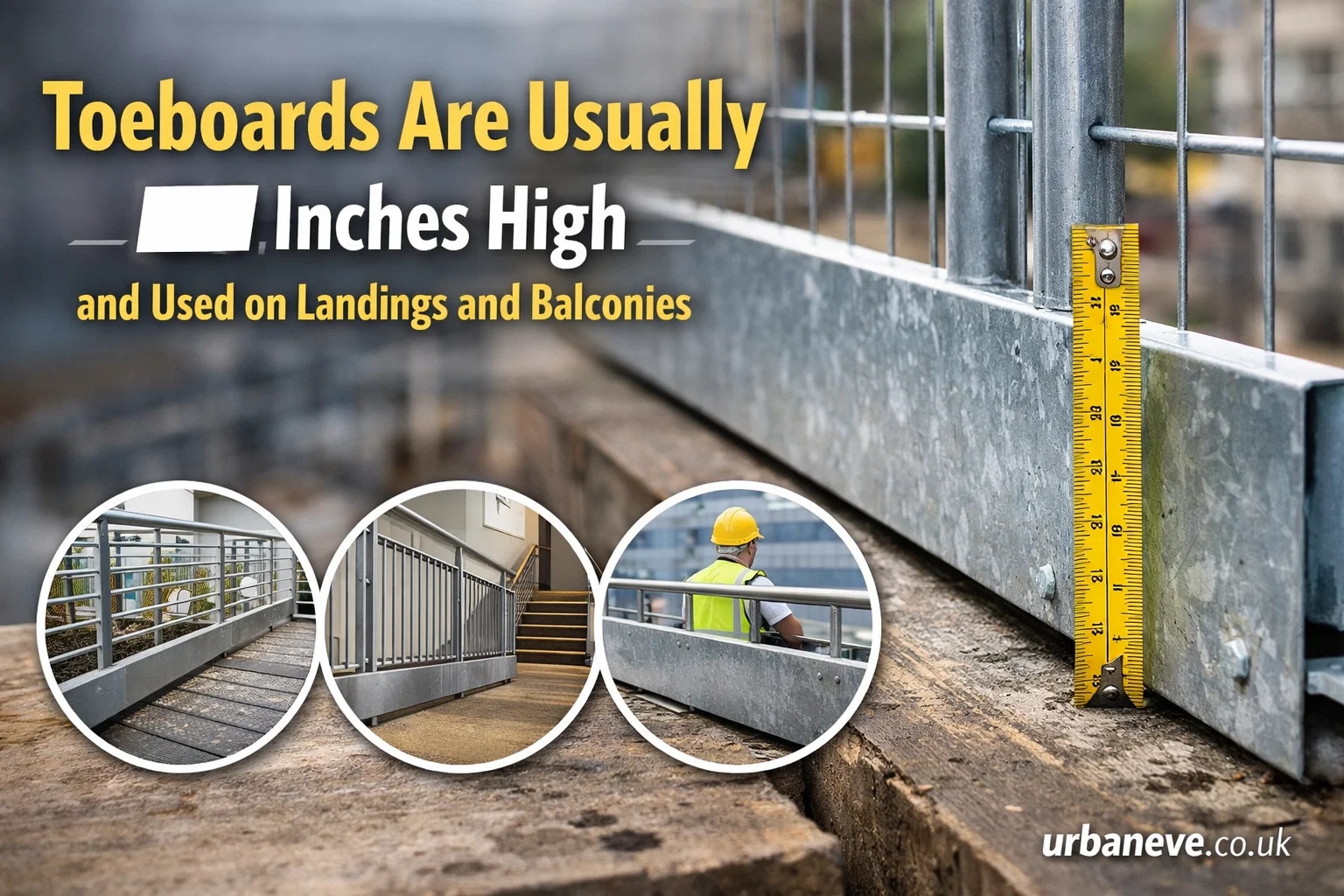
In the world of construction, architecture, and building safety, catastrophic incidents are often prevented by details that most people never notice. Guardrails, handrails, and warning signs are obvious safeguards. Toeboards, however, are subtle. They sit quietly at the base of railings on landings and balconies, rarely attracting attention—until they are missing.
The phrase “toeboards are usually ___ inches high and used on landings and balconies” appears frequently in safety manuals, certification exams, trade training programs, and compliance documentation. While it may look like a simple fill‑in‑the‑blank question, it represents decades of safety research, regulatory evolution, and hard‑learned lessons from workplace accidents.
This article takes a deep, authoritative look at what that statement truly means. Written in the style of high‑quality, trusted publications like Forbes, it explains not only the standard height requirement behind toeboards, but also the reasoning, regulations, real‑world implications, and best practices surrounding their use.
By the end of this guide, you will understand why toeboards exist, how they protect people and property, and why they remain one of the most cost‑effective safety measures in modern construction and building design.
Completing the Reading Prompt: Understanding the Blank
Let us begin by addressing the reading prompt directly:
toeboards are usually ___ inches high and used on landings and balconies
Across occupational safety regulations, building codes, and international standards, the widely accepted completion of this statement is 4 inches.
This measurement is not arbitrary. It is grounded in safety engineering, human movement patterns, and extensive incident data. The remainder of this article explains how and why this specific height became the global benchmark.
What Is a Toeboard? A Clear and Practical Definition
A toeboard is a vertical barrier installed at the base of a guardrail system along the exposed edge of an elevated surface. Unlike handrails or midrails, which protect people, toeboards primarily protect against falling objects.
Their main purposes include:
- Preventing tools, materials, or debris from being kicked off edges
- Protecting workers and pedestrians below from falling objects
- Reducing liability risks for property owners and employers
Toeboards are commonly installed on:
- Stair landings
- Balconies
- Mezzanines
- Scaffolding platforms
- Rooftop walkways
Despite their simple appearance, toeboards are a critical element of comprehensive fall‑protection systems.
Why Height Matters in Toeboard Design
The Science Behind the Measurement
The height of a toeboard determines its effectiveness. Safety engineers studied how objects move across walking surfaces and identified the typical height at which items roll, slide, or are unintentionally kicked.
A height of 4 inches was found to:
- Stop common hand tools like hammers and wrenches
- Block fasteners, bricks, and small equipment
- Reduce momentum before objects reach the edge
Shorter barriers failed to consistently stop objects, while taller barriers interfered with workflow and visibility. As a result, when professionals reference “toeboards are usually ___ inches high and used on landings and balconies,” they are referencing this optimized safety threshold.
OSHA Regulations: The Foundation of Toeboard Standards
OSHA 1910 and 1926 Explained
In the United States, the Occupational Safety and Health Administration (OSHA) establishes enforceable safety standards. Toeboards are covered under both general industry and construction regulations.
Key OSHA requirements include:
- A minimum height of 4 inches from the walking surface
- Secure attachment to prevent displacement
- Installation along all open sides where falling objects pose a hazard
OSHA mandates toeboards in areas where employees work above others, especially on landings, platforms, and balconies within active job sites.
International Building Codes and Global Alignment
A Worldwide Safety Consensus
The 4‑inch standard is not limited to OSHA. Similar requirements exist globally:
- European safety standards reference a 100 mm minimum height
- UK Health and Safety Executive guidelines mirror OSHA principles
- International Organization for Standardization (ISO) safety frameworks align closely
This global agreement reinforces the reliability of the standard and explains why the phrase “toeboards are usually ___ inches high and used on landings and balconies” appears in training materials worldwide.
Why Landings and Balconies Are High‑Risk Areas
Landings and balconies combine elevation with frequent human activity. These areas often experience:
- Heavy foot traffic
- Storage of tools or personal items
- Proximity to open edges
A single dropped object from a balcony can fall multiple stories, dramatically increasing impact force. Toeboards serve as the final line of defense, preventing objects from reaching the edge in the first place.
Real‑World Case Studies: When Toeboards Make the Difference
Case Study 1: Construction Site Prevention
On a multi‑story commercial project, a properly installed toeboard stopped a power drill from falling three floors onto a pedestrian walkway. The drill struck the toeboard, lost momentum, and dropped harmlessly back onto the platform.
Case Study 2: Residential Balcony Safety
A property management firm installed toeboards on high‑rise residential balconies during renovations. Within the first year, reported falling‑object incidents dropped to zero.
These examples highlight why toeboards are more than code compliance—they are life‑saving measures.
Materials Used in Modern Toeboards
Toeboards can be constructed from various materials, depending on environment and use:
- Steel: Common in industrial settings
- Aluminum: Lightweight and corrosion‑resistant
- Wood: Frequently used on scaffolding
- Composite materials: Increasingly popular in modern architecture
Regardless of material, the height and strength requirements remain consistent.
Installation Best Practices for Maximum Safety
Proper installation is just as important as correct height. Best practices include:
- Securing toeboards flush against the walking surface
- Eliminating gaps that allow small objects to pass through
- Inspecting regularly for damage or loosening
Improperly installed toeboards can create a false sense of security.
Common Compliance Mistakes to Avoid
Even experienced professionals make errors, including:
- Installing toeboards below the minimum height
- Leaving gaps at corners or joints
- Using weak materials that deform on impact
Avoiding these mistakes ensures that the intent behind the standard is fully realized.
Toeboards in Modern Architecture and Design
Architects increasingly integrate safety features seamlessly into aesthetics. Modern toeboards may be:
- Hidden within railing systems
- Color‑matched to flooring
- Designed as multifunctional barriers
Safety and design no longer need to conflict.
Maintenance and Inspection Requirements
Routine inspections are essential. Facility managers should:
- Check for corrosion or rot
- Ensure fasteners remain secure
- Replace damaged sections promptly
Maintenance ensures long‑term compliance and effectiveness.
Legal and Financial Implications of Non‑Compliance
Failing to install toeboards can result in:
- OSHA citations and fines
- Increased insurance premiums
- Civil liability claims
In contrast, compliance is inexpensive and straightforward.
The Future of Toeboards and Safety Innovation
Advances in materials science and modular construction may lead to smarter, more adaptable toeboards. However, the core principle behind the phrase “toeboards are usually ___ inches high and used on landings and balconies” is unlikely to change.
Conclusion: Why This Small Detail Matters
Toeboards may be one of the least noticeable safety features in a building, but they play an outsized role in preventing injuries and fatalities. The simple truth behind the phrase “toeboards are usually ___ inches high and used on landings and balconies” reflects decades of engineering research, regulatory consensus, and real‑world experience.
For builders, architects, safety officers, and property owners, understanding and applying this standard is not just about passing inspections—it is about protecting lives.