
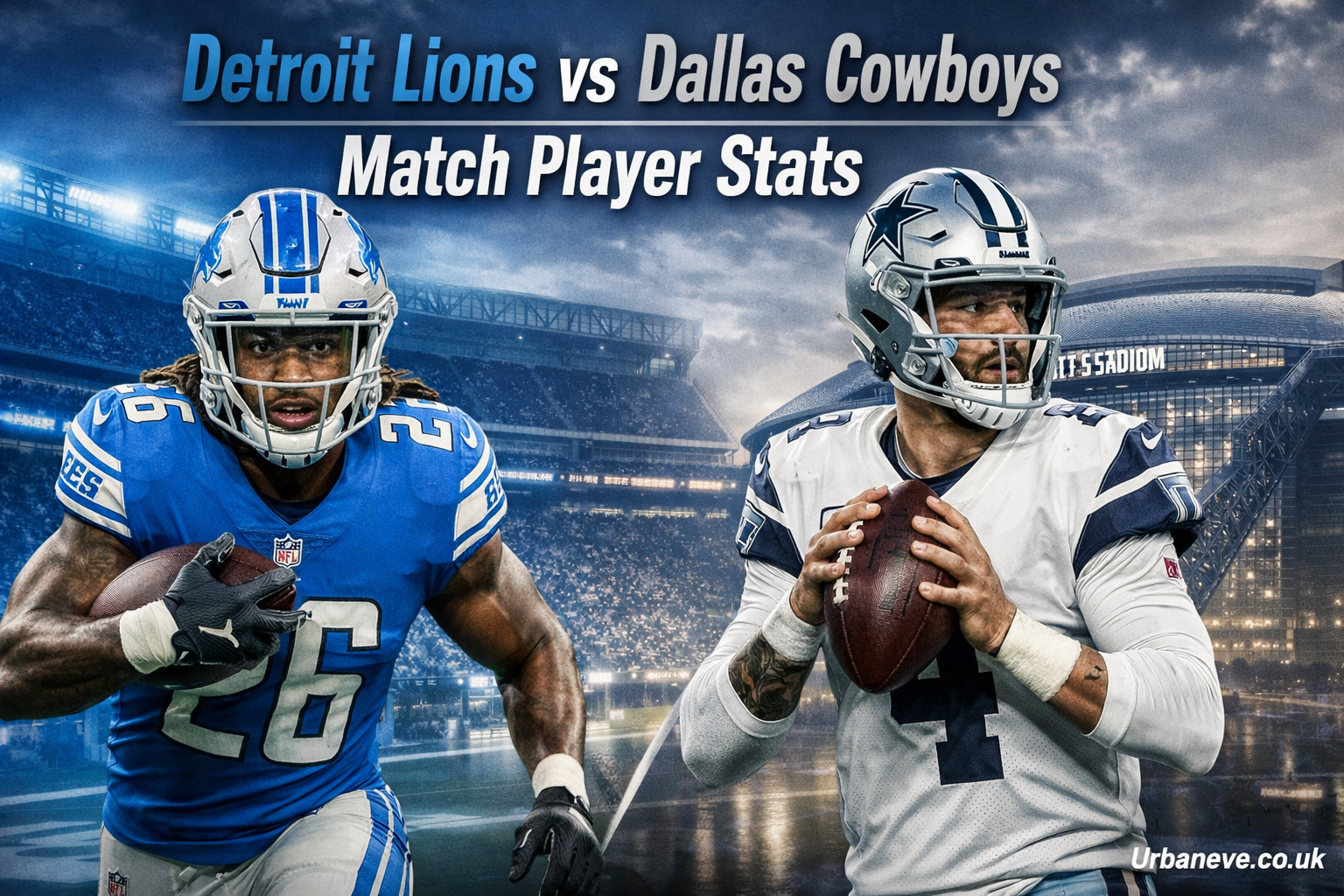
Few NFL matchups generate the level of attention that a Detroit Lions vs Dallas Cowboys game does. These are two franchises with massive fan bases, rich histories, and playoff ambitions that rarely go unnoticed. When they meet, every snap is examined, and every stat becomes part of a larger narrative. The most recent clash between the Lions and the Cowboys was no exception. It delivered offense, momentum swings, and individual performances that shaped the final result and revealed deeper truths about both teams.
This article offers a complete, human‑written breakdown of the Detroit Lions vs Dallas Cowboys match player stats. Rather than simply listing numbers, it explains what those numbers mean, why they mattered, and how they reflected the flow of the game.
Game Context and Final Score
The matchup unfolded as a high‑scoring contest that leaned heavily in Detroit’s favor. The Lions emerged with a 44–30 victory, but the score alone doesn’t fully capture how the game developed. Dallas moved the ball effectively for long stretches, while Detroit capitalized on key moments with ruthless efficiency. The player statistics from both sides show a clear contrast between raw production and situational execution.
Quarterback Performance: Efficiency Versus Volume
At quarterback, the statistical comparison highlights two very different performances.
Detroit’s Jared Goff delivered one of his most efficient outings of the season. He completed a high percentage of his passes, finishing with just over 300 passing yards and a touchdown. More importantly, he avoided turnovers and consistently kept the Lions in favorable down‑and‑distance situations. Goff’s ability to distribute the ball quickly and accurately allowed Detroit’s offense to stay balanced and unpredictable throughout the game.
On the other side, Dak Prescott produced impressive volume for Dallas. He threw for nearly 400 yards, demonstrating his arm strength and willingness to attack downfield. However, those yards came with a cost. Prescott was forced into multiple risky throws as Dallas chased the game, resulting in interceptions that shifted momentum. While his stat line looks productive on paper, the turnovers proved far more damaging than the yardage was helpful.
Rushing Production: Detroit’s Red‑Zone Advantage
The running game ultimately separated the two teams, particularly near the goal line.
Jahmyr Gibbs was the standout performer for Detroit. Though his total rushing yardage was modest, his impact was massive. Gibbs scored three rushing touchdowns, consistently finding gaps in tight spaces and finishing drives that might have stalled for other teams. His acceleration and vision were especially evident in short‑yardage situations, where Detroit showed complete trust in him.
David Montgomery added another layer to the Lions’ ground attack. His power running complemented Gibbs’ speed, and his long touchdown run in the first half set the tone physically. Together, the Lions’ backs accounted for four rushing touchdowns, turning red‑zone trips into guaranteed points.
Dallas, by comparison, struggled to generate the same effectiveness on the ground. Their running backs produced steady but unspectacular yardage, and only one rushing touchdown came from the Cowboys. Without consistent success inside the red zone, Dallas was forced to rely on field goals rather than touchdowns.
Receiving Leaders: Big Plays and Balanced Production
The receiving stats tell a story of contrast between individual dominance and collective balance.
For Dallas, CeeDee Lamb once again proved why he is considered one of the league’s elite wide receivers. He surpassed 120 receiving yards, repeatedly creating separation and making contested catches. Ryan Flournoy also emerged as a significant contributor, recording over 100 yards and a touchdown. These performances kept Dallas competitive and stretched Detroit’s secondary.
Detroit, however, spread the ball far more evenly. Amon‑Ra St. Brown delivered his usual reliable production, moving the chains and winning key third downs. Jameson Williams added explosiveness, using his speed to flip field position and apply pressure to the Cowboys’ safeties. Jahmyr Gibbs further blurred the line between runner and receiver, contributing heavily in the passing game and forcing mismatches against linebackers.
This balanced approach made Detroit’s offense harder to defend. Dallas couldn’t focus on taking away one player without leaving another open.
Defensive Impact: Turnovers and Pressure
Defense often gets overlooked in high‑scoring games, but this matchup was decided by defensive moments.
Detroit’s defense came through with timely pressure and takeaways. Multiple sacks disrupted Dallas’ rhythm, forcing Prescott into hurried throws. Two interceptions swung momentum decisively in Detroit’s favor, both coming at moments when Dallas appeared poised to close the gap.
Dallas’ defense, while active, couldn’t generate the same level of impact. They recorded sacks and made stops, but they failed to produce turnovers. That difference proved critical. In a game where both offenses moved the ball, the ability to steal possessions became the defining factor.
Special Teams and Field Position
Special teams played a subtle but important role. Dallas’ kicker delivered a remarkable performance, converting every field goal attempt, including several from long distance. Those kicks kept the Cowboys within striking distance for much of the game.
Detroit’s special teams were less spectacular but steady. Extra points were automatic, and field goals were timely. The difference lay not in accuracy, but in opportunity. Detroit simply reached the end zone more often, minimizing the overall impact of Dallas’ perfect kicking night.
Key Statistical Differences That Decided the Game
When reviewing the full Detroit Lions vs Dallas Cowboys match player stats, three areas stand out above all others. Detroit finished drives with touchdowns, while Dallas settled for field goals. Detroit protected the football, while Dallas turned it over. And Detroit generated more yards per play, showing superior efficiency even with fewer total snaps.
These differences explain how a game that felt competitive for long stretches ended with a two‑score margin.
What the Numbers Mean Going Forward
For Detroit, this performance reinforced their identity as a complete offensive team. The balance between passing efficiency and red‑zone rushing suggests a formula that translates well into playoff football. The defensive takeaways also hint at growth in a unit that has faced criticism in past seasons.
For Dallas, the stats highlight both promise and concern. The passing offense can produce against top competition, but turnovers and red‑zone struggles remain issues. Until those are addressed, high yardage totals may continue to fall short of wins against elite opponents.
Conclusion
The Detroit Lions vs Dallas Cowboys match player stats reveal far more than individual box‑score achievements. They tell the story of a game decided by efficiency, discipline, and execution at critical moments. Detroit didn’t just outscore Dallas; they outperformed them where it mattered most. The numbers confirm what the game showed in real time: touchdowns beat field goals, clean football beats risky football, and balance often beats brilliance.
For fans, analysts, and anyone studying the matchup, this game serves as a clear example of how statistics, when read properly, explain not just who won, but why.