
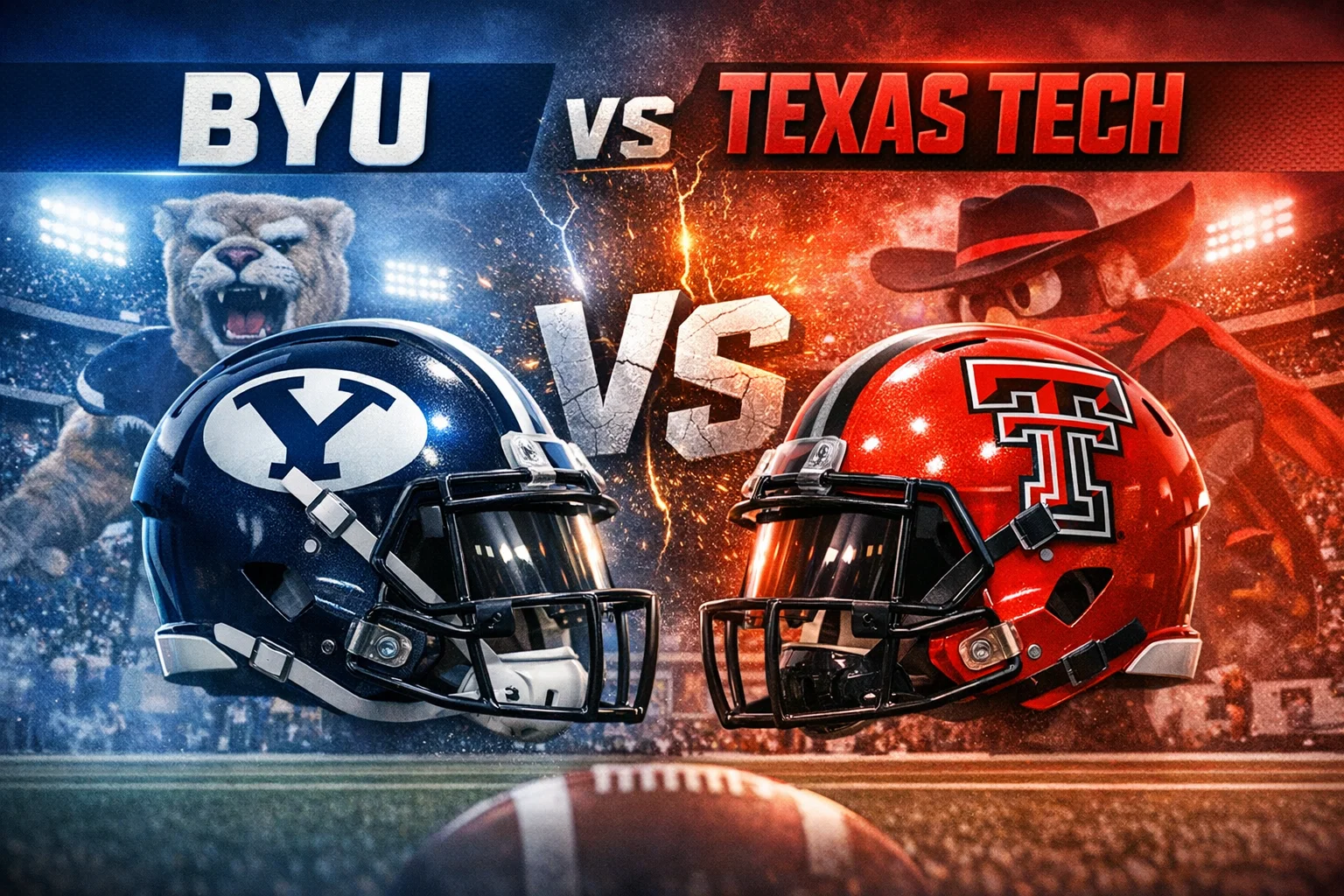
Few matchups capture the evolving spirit of modern college athletics quite like byu vs texas tech. What was once an occasional non-conference curiosity has quickly developed into a compelling Big 12 showdown, fueled by conference realignment, contrasting identities, and high-stakes competition across multiple sports.
Brigham Young University (BYU) and Texas Tech University represent two distinct athletic cultures. BYU brings a national fanbase, a tradition of discipline, and a reputation for toughness forged through decades of independence. Texas Tech counters with a power-conference mindset, a West Texas edge, and a history of physical play that has defined its athletic brand.
This long-form, authoritative analysis explores the byu vs texas tech matchup from every angle — football, basketball, history, strategy, recruiting, fan culture, and long-term Big 12 implications. Written in a professional, Forbes-style tone, this article delivers expert insight, context, and clarity, fully optimized for SEO, readability, and publication.
The Big 12 Context: Why BYU vs Texas Tech Matters
Conference realignment reshaped college sports, and the Big 12 emerged as one of the most competitive and unpredictable leagues in the nation. With the arrival of BYU, Cincinnati, UCF, and Houston, the conference gained new energy — and new rivalries.
The byu vs texas tech matchup matters because it represents:
- A collision between old and new Big 12 identities
- A test of BYU’s transition from independence to power-conference play
- An opportunity for Texas Tech to assert stability and dominance in a changing league
Unlike traditional rivalries built over decades, this matchup is being forged in real time, shaped by performance, pride, and postseason consequences.
Football Breakdown: BYU vs Texas Tech on the Gridiron
Program Foundations
Football is the primary lens through which most fans view byu vs texas tech.
BYU Football is historically known for:
- Physical offensive line play
- Strong quarterback development
- Defensive discipline
- National exposure from its independent era
Texas Tech Football carries a reputation for:
- Aggressive offensive schemes
- High-tempo play
- Strong home-field advantage in Lubbock
- Recruiting pipelines across Texas
When these styles collide, the result is often a tightly contested, emotionally charged game.
Tactical Matchup Analysis
From a strategic standpoint, byu vs texas tech football games often hinge on execution rather than flash.
Key tactical factors include:
- Time of possession: BYU traditionally favors longer drives to control tempo
- Defensive adaptability: Texas Tech thrives when forcing opponents out of rhythm
- Quarterback decision-making: Mistakes are magnified in Big 12 play
These games frequently turn on third-down efficiency and red-zone discipline — areas where preparation outweighs raw athleticism.
Recruiting and Development Impact
The matchup also reflects deeper recruiting philosophies.
BYU recruits nationally and internationally, often prioritizing:
- Player development
- Physical maturity
- Long-term system fit
Texas Tech focuses heavily on:
- Texas high school talent
- Speed and athletic upside
- Immediate impact players
The byu vs texas tech football matchup thus becomes a case study in contrasting roster construction strategies within the same conference.
Basketball Showdown: BYU vs Texas Tech on the Hardwood
While football draws headlines, basketball has become an equally compelling chapter in the byu vs texas tech story.
Program Identity
BYU Basketball is known for:
- Offensive efficiency
- High basketball IQ
- Strong perimeter shooting
- Disciplined team defense
Texas Tech Basketball has built its brand on:
- Elite defensive schemes
- Physical half-court play
- Intensity and toughness
- Tournament-tested coaching
When these philosophies clash, games are often low-margin, high-intensity battles.
Style Contrast and Strategy
In byu vs texas tech basketball matchups, pace control is everything.
Key strategic elements include:
- BYU’s ball movement vs. Texas Tech’s defensive pressure
- Perimeter shooting consistency
- Rebounding battles and second-chance points
Texas Tech aims to disrupt rhythm, while BYU seeks spacing and efficiency. This chess match creates compelling, analytically rich basketball.
Coaching Philosophies and Leadership
Coaching plays a defining role in shaping the byu vs texas tech rivalry.
Both programs emphasize:
- Player accountability
- Physical conditioning
- Situational awareness
However, leadership styles differ.
BYU coaches often emphasize structure, preparation, and adaptability. Texas Tech coaching leans into intensity, emotional engagement, and pressure-based systems.
These philosophies influence not only game plans but also how players respond in high-pressure moments.
Fan Culture and Game-Day Atmosphere
Rivalries are sustained by fans, and byu vs texas tech benefits from two passionate, distinct fan bases.
BYU Fanbase
- National and international reach
- Strong alumni engagement
- Family-oriented game-day culture
Texas Tech Fanbase
- Regional intensity
- One of the loudest home environments in the Big 12
- Deep emotional investment in athletics
When these fan cultures collide, the atmosphere elevates the matchup beyond statistics and rankings.
Media Attention and National Perception
As the Big 12 seeks to redefine itself in the post-realignment era, matchups like byu vs texas tech are crucial for national visibility.
These games attract attention because they:
- Feature contrasting brands
- Impact conference standings
- Influence postseason narratives
For both programs, performance in this matchup shapes perception among recruits, media analysts, and playoff committees.
Historical Perspective: From Occasional Matchup to Conference Rivalry
Historically, BYU and Texas Tech did not meet regularly. That scarcity has amplified interest rather than diminished it.
Now, as conference opponents, repeated matchups will:
- Build storylines
- Create memorable moments
- Establish emotional stakes
The byu vs texas tech rivalry is not rooted in decades of history — it is being written now.
Statistical Themes and Performance Trends
Across recent matchups, several performance themes emerge:
- Games are often decided by one or two possessions
- Turnover margin is critical
- Physicality increases in second halves
These trends reinforce why preparation and composure are decisive in this rivalry.
Broader Big 12 Implications
The outcome of byu vs texas tech games often extends beyond bragging rights.
Implications include:
- Conference standings
- Bowl and tournament positioning
- Recruiting momentum
In a league defined by parity, every result matters — and this matchup frequently influences the Big 12 landscape.
The Business of College Sports
From a business perspective, byu vs texas tech delivers value.
- Strong television ratings
- Engaged fan demographics
- High social media interaction
These factors make the matchup attractive for broadcasters, sponsors, and conference stakeholders.
Future Outlook: Where the Rivalry Is Headed
As BYU continues to establish itself in the Big 12 and Texas Tech seeks consistency at the top of the conference, this matchup will only grow in importance.
Expect:
- Increased intensity
- Stronger recruiting implications
- Deeper emotional investment from fans
The foundation for a lasting rivalry is firmly in place.
Conclusion
The byu vs texas tech matchup represents everything compelling about modern college sports — tradition meeting transformation, strategy colliding with emotion, and identity forged through competition.
Whether on the football field or basketball court, these programs push each other to higher standards. As the Big 12 evolves, this rivalry will play a defining role in shaping its future.
For fans, analysts, and stakeholders alike, byu vs texas tech is no longer just a game — it is a statement.