
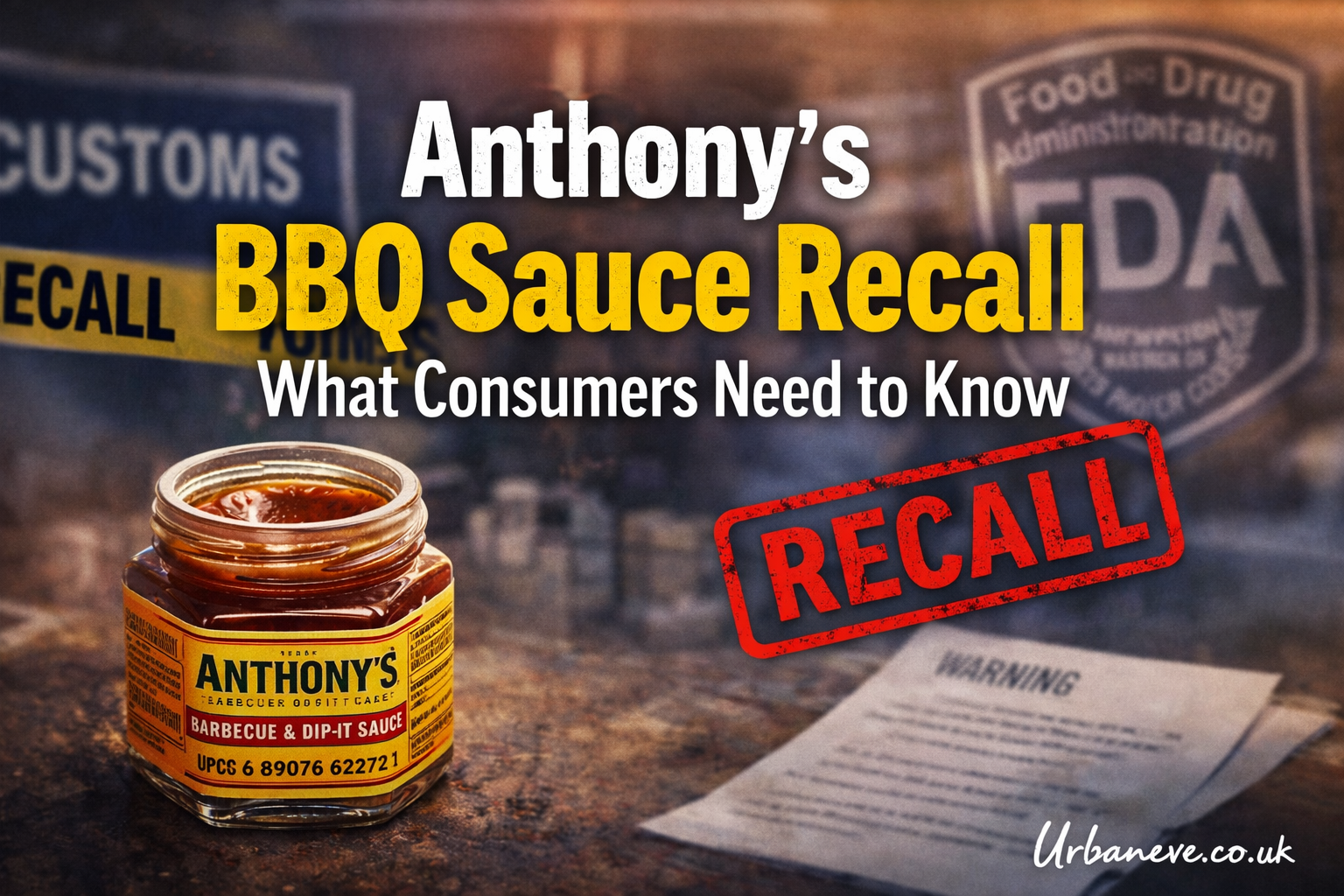
Food recalls rarely make headlines unless they involve nationwide brands or widespread illness. Yet even small, regional recalls can carry serious consequences, especially when they involve undeclared allergens. The Anthony’s BBQ sauce recall is one of those cases. At first glance, it appears limited in scope, affecting a single product sold in a handful of locations. However, for consumers with food allergies, the implications are significant.
The recall centers on a labeling issue involving anchovy, a type of fish that qualifies as a major food allergen under U.S. law. When allergens are not clearly declared, consumers lose the ability to make safe, informed decisions. This article explains what prompted the recall, who is affected, and why even localized food safety issues deserve attention.
What Product Is Involved in the Anthony’s BBQ Sauce Recall
The recalled product is Anthony’s Barbecue & Dip-It Sauce, packaged in a 15-ounce glass bottle. The issue arose when it was discovered that the sauce may contain anchovy, yet the label did not disclose the presence of fish. Because fish is recognized as a major allergen, this omission triggered regulatory action.
The product was distributed through a small number of retail outlets in Oregon. While the recall did not involve large national chains, it still required formal notification because of the potential health risk to allergic consumers. No illnesses were reported at the time the recall was announced, but the absence of reported harm does not lessen the seriousness of the labeling failure.
Why Anchovy Labeling Is a Serious Safety Issue
Anchovy is often used in sauces to enhance flavor depth, even in products where consumers may not expect it. For individuals without allergies, anchovy may be harmless or even unnoticed. For someone with a fish allergy, however, even trace amounts can trigger a severe immune response.
Fish allergies can cause symptoms ranging from mild skin reactions to life-threatening anaphylaxis. Because reactions can escalate quickly, avoidance is the primary method of prevention. That avoidance depends entirely on accurate labeling. When a product contains an undeclared allergen, consumers are placed at risk without their knowledge.
This is why U.S. food safety laws treat undeclared allergens as one of the most serious recall triggers, even when contamination levels are low or no illnesses have yet occurred.
How the Labeling Error Was Discovered
According to regulatory information, the labeling issue was identified during an inspection. Inspectors found that the sauce contained anchovy while the packaging failed to disclose fish as an ingredient or allergen. Once the issue was confirmed, the manufacturer initiated a recall in cooperation with regulatory authorities.
This type of discovery is not uncommon. Labeling errors are frequently uncovered during routine audits, not after consumer complaints. Inspections are designed to catch precisely these kinds of problems before they result in medical emergencies.
The recall was issued as a precautionary measure, emphasizing prevention rather than reaction. This approach reflects how modern food safety systems aim to address risk before harm occurs.
Who Is Most Affected by the Recall
The primary group affected by the Anthony’s BBQ sauce recall is individuals with fish allergies. For them, the presence of undeclared anchovy presents a direct health threat. Families managing allergies often rely on label accuracy as their first line of defense.
Secondary effects may be felt by caregivers, schools, and community organizations that manage food for groups with known allergies. A mislabeled product, even when sold locally, can move through social networks quickly, reaching households far beyond the original point of sale.
Consumers without fish allergies are unlikely to experience adverse health effects from the sauce. However, the recall still matters because it reflects broader food safety standards that protect everyone.
What Consumers Should Do If They Purchased the Sauce
Consumers who believe they may have purchased the affected sauce should stop using it immediately if fish allergy is a concern. The recommended action is to return the product to the place of purchase for a refund.
Anyone who has already consumed the sauce and experiences symptoms consistent with an allergic reaction should seek medical attention promptly. Allergic reactions can escalate quickly, and early treatment can be lifesaving.
Even consumers without allergies may choose to return the product out of caution or principle. Recalls exist to remove uncertainty from the marketplace, and participating in them helps reinforce accountability.
Why Food Recalls Often Involve Small Producers
There is a common misconception that food safety problems only arise in large industrial operations. In reality, small producers face their own challenges. Limited staffing, manual labeling processes, and evolving recipes can increase the risk of oversight.
This does not mean small businesses are careless. Many operate with strong quality values and close customer relationships. However, regulatory compliance requires specialized knowledge and constant vigilance. Even a single missed label update can trigger a recall.
The Anthony’s BBQ sauce recall highlights how food safety expectations apply equally to all producers, regardless of size. Uniform standards exist to ensure consumer protection across the entire food system.
The Role of Food Allergen Laws in the United States
U.S. food allergen laws were established in response to rising awareness of allergy-related health risks. Fish is designated as a major allergen, meaning its presence must be clearly disclosed on product labels.
These laws exist to provide transparency, not to punish manufacturers. When companies follow labeling requirements, consumers can manage risk effectively. When labels fail, recalls become necessary to restore that trust.
The continued expansion of allergen regulations reflects growing scientific understanding and consumer advocacy. Each recall reinforces why these protections matter.
What This Recall Reveals About Consumer Trust
Trust in food products is built over time and can be shaken quickly. Even a single recall can cause consumers to question a brand’s reliability. For small producers, that impact can be particularly challenging.
At the same time, issuing a recall demonstrates responsibility. Taking swift action, cooperating with regulators, and communicating clearly can help rebuild confidence. Many consumers view transparency during recalls as a sign of integrity rather than failure.
In this sense, how a company responds can matter as much as the original mistake.
Conclusion
The Anthony’s BBQ sauce recall is a reminder that food safety depends on details that are easy to overlook but impossible to ignore when they fail. An undeclared allergen, even in a product sold locally and without reported illness, represents a real risk for vulnerable consumers.
For those with fish allergies, accurate labeling is not optional. It is essential. This recall underscores why regulatory oversight, inspections, and transparent communication remain critical parts of the modern food system.
While the recall may be limited in scope, its lesson is universal. Food safety is built on trust, and trust begins with truth on the label.