
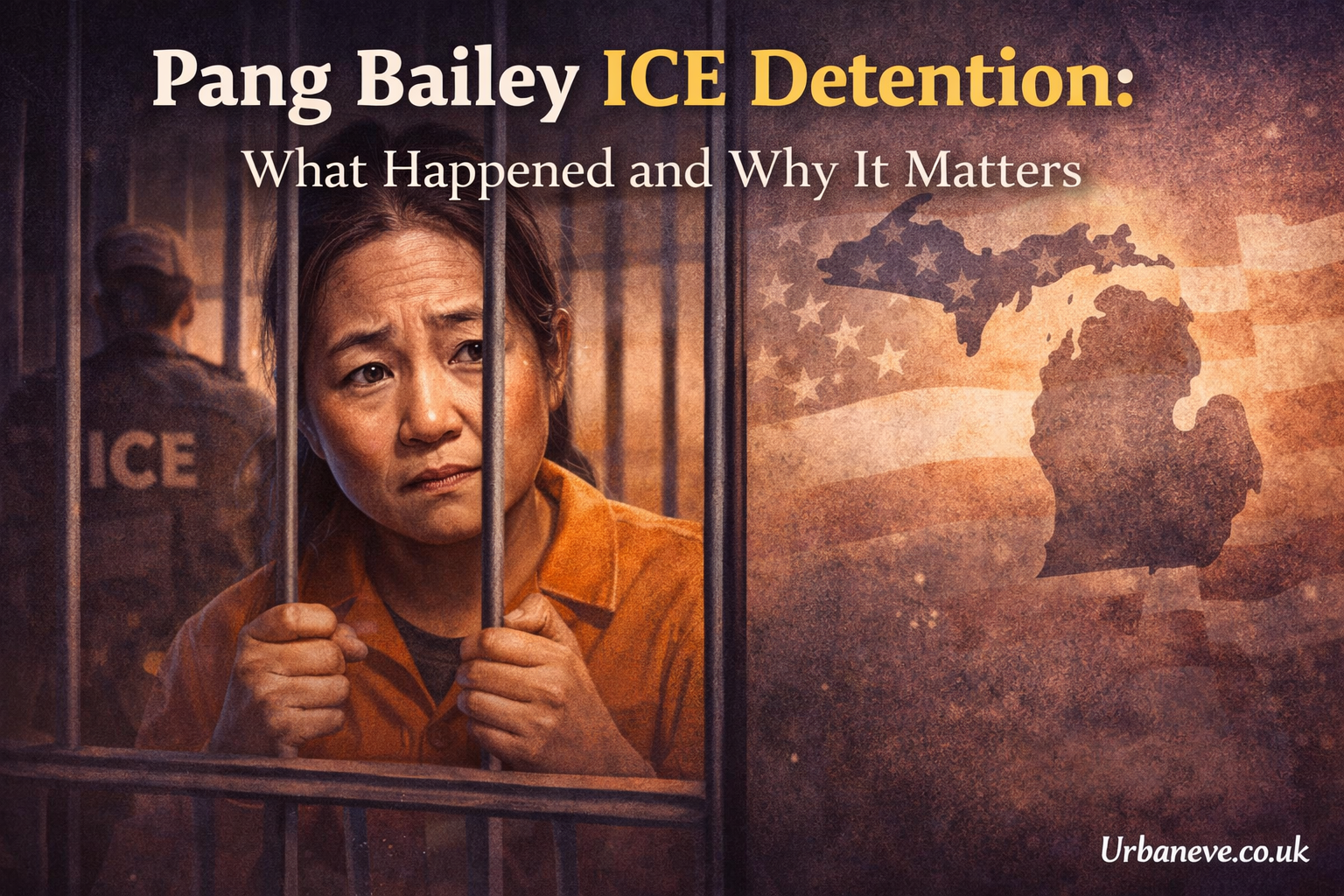
The case of Pang Bailey’s ICE detention has drawn national attention, not because it is sensational, but because it highlights a quiet reality faced by many long-term immigrants in the United States. For families who believed their lives were settled, secure, and rooted, the sudden detention of a loved one can feel both shocking and deeply destabilizing. Pang Bailey’s story is one of history, law, and human impact colliding in a single moment.
This article explains what is known about Pang Bailey’s ICE detention, why it matters beyond one individual case, and what it reveals about the broader U.S. immigration enforcement system.
Who Is Pang Bailey?
Pang Bailey is widely reported to be a Hmong refugee who has lived in the United States for decades. Like many Hmong families, her journey to America traces back to the aftermath of the Vietnam War and U.S. involvement in Southeast Asia. Thousands of Hmong refugees were resettled in the United States during the 1970s and 1980s after fleeing conflict and persecution in Laos.
Over the years, Pang Bailey built a life in the United States, raising a family and integrating into her community. To neighbors and loved ones, she was not an immigrant in transition but a permanent part of the American social fabric. That perception is what made her detention so jarring to those who knew her story.
What Happened During the ICE Detention
According to public reports, Pang Bailey was detained by Immigration and Customs Enforcement during what was described as a routine immigration-related appointment. These appointments, often referred to as check-ins or reporting requirements, are typically meant to confirm compliance with immigration obligations rather than initiate detention.
Instead, Pang Bailey was taken into ICE custody and later transferred to detention facilities far from her home state. Such transfers are common within the ICE system and can occur with little notice. For families, this often means sudden separation, limited communication, and difficulty accessing legal representation.
The timing and manner of the detention intensified fear within the local community, especially among others who were required to attend similar appointments. Many began to question whether routine compliance could unexpectedly lead to detention.
Why Pang Bailey’s Case Gained Attention
Pang Bailey’s detention resonated because it was not seen as an isolated incident. Reports suggested that multiple Hmong individuals in the same region were detained around the same time, amplifying concern that the community was being disproportionately affected.
For Hmong Americans, the case reopened longstanding fears tied to deportation policies targeting Southeast Asian refugees. Over the past two decades, individuals with decades-old legal issues have faced removal proceedings, even after building families and lives in the United States.
This history created a sense of collective vulnerability. Pang Bailey’s detention became a symbol of uncertainty, reminding many that time spent in the country does not always guarantee protection from immigration enforcement.
Understanding the Legal Background
While many details of Pang Bailey’s legal history are not fully public, reporting indicates that her case may involve past legal issues from many years ago. Under U.S. immigration law, certain convictions, even those that occurred decades earlier, can trigger enforcement actions.
Immigration law operates separately from criminal law. A sentence served long ago does not necessarily resolve immigration consequences. This legal structure often surprises families who believed that old cases were permanently settled.
In many refugee communities, limited access to legal guidance in earlier decades has resulted in unresolved immigration vulnerabilities that only surface years later, often during routine encounters with authorities.
The ICE Detention System Today
Pang Bailey’s detention must be understood within the context of a rapidly expanding ICE detention system. In recent years, detention capacity has grown, and enforcement has increasingly relied on detention as a central tool.
Many detainees are held in facilities located far from their homes, frequently in states such as Texas and Louisiana. Transfers between facilities are common, and detainees may be moved multiple times during their case.
Despite public perceptions, a significant portion of people in ICE detention do not have recent criminal convictions. Detention is a civil process, intended to ensure participation in immigration proceedings, but the experience can feel punitive due to restrictions on movement, communication, and access to resources.
The Impact on Families and Communities
The emotional impact of ICE detention extends far beyond the individual being held. Families often experience immediate financial strain, emotional distress, and uncertainty about the future. Children may struggle with anxiety and fear, while spouses face the pressure of navigating legal systems alone.
In refugee communities, these effects are magnified by historical trauma. Many Hmong families associate forced movement and separation with earlier experiences of war and displacement. Detention can reopen wounds that were never fully healed.
Community organizations often step in to provide support, but resources are limited. Fundraising efforts and advocacy campaigns may offer temporary relief, yet they cannot replace the stability lost when a family member is detained.
Deportation and Southeast Asian Refugees
Deportation involving Southeast Asian refugees carries unique challenges. Some individuals face removal to countries they have not lived in since childhood or, in some cases, have never known as adults. Language barriers, lack of social networks, and unfamiliar cultural systems create serious reintegration risks.
Additionally, deportation depends on cooperation between governments. Countries such as Laos have historically been inconsistent in accepting deportees, creating prolonged periods of detention or legal limbo for individuals caught in the process.
These factors contribute to prolonged uncertainty, making detention not just a temporary measure but a life-altering disruption.
Why This Case Matters Nationally
The Pang Bailey ICE detention matters because it reflects broader systemic issues rather than a single legal dispute. It raises questions about fairness, transparency, and proportionality in immigration enforcement.
Critics argue that detaining long-term residents with deep family ties undermines trust in the system and destabilizes communities. Supporters of strict enforcement counter that the law must be applied consistently. The tension between these perspectives continues to shape national immigration debates.
What is often missing from policy discussions is the lived experience of families caught in the middle. Pang Bailey’s case humanizes those consequences, making abstract legal concepts tangible and personal.
Looking Ahead
Cases like Pang Bailey’s suggest that immigration enforcement will remain a defining issue for refugee and immigrant communities. As detention capacity expands, more families may face similar uncertainty unless reforms address long-term residents and humanitarian considerations.
Legal awareness, community support, and policy transparency will play crucial roles in shaping future outcomes. For many families, the hope is not simply to avoid detention but to achieve clarity and security after decades of contribution and residence.
Conclusion
Pang Bailey’s ICE detention is not just a legal story; it is a human one. It reflects the fragile balance between enforcement and belonging in the U.S. immigration system. For communities that have spent decades building lives in America, her case serves as a sobering reminder that stability can be challenged without warning.
Understanding what happened to Pang Bailey helps illuminate a system that often operates quietly until it touches someone close. As debates over immigration continue, stories like hers remind us that behind every policy decision is a family waiting for certainty, dignity, and the chance to remain whole.